Now More Than Ever, The World Needs Your Creative Work
Now more than ever, the world needs your creative work — and you need it too.
It seems everywhere we turn, the world feels like it’s on fire. If you’re in the US right now, it’s a game of who hates who more. It feels like there is a new crazy breaking news article every hour. Social media is filled with algorithms of hate because they know how to get clicks and steal your precious attention away.
Anger sells. And business is very good in 2026.
I know right now you’re rolling your eyes. “Oh boy, Eric is about to get political here.” I assure you I am not. There are far better people to listen to about politics than me, and there are more than enough people who will freely give you their opinion — whether it’s right or wrong.
I just wanted to set the stage.
You see, in this crazy time where everything feels heavy, we all need to figure out how to stay sane. If that means protesting or not, writing to politicians, or binging Netflix until the screen says “Are you still watching?” — each and every one of us has to figure out how to make it through what’s going on.
I say focus on your creative work. You need it. We need it now more than ever.
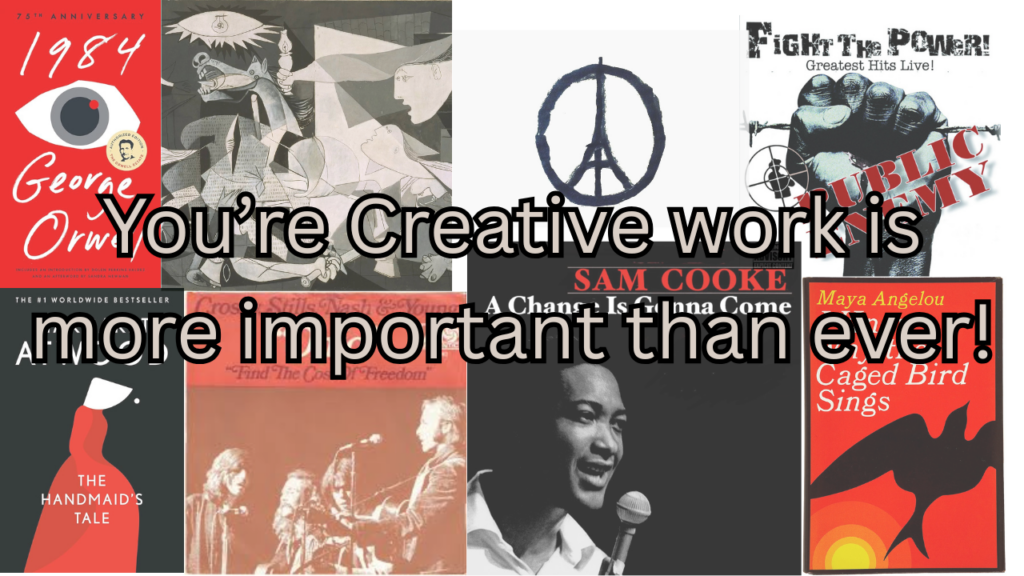
When history looks back on this time period, it won’t be what’s written in textbooks that tells the story. It will be the art that was produced.
Let me give you some examples.
Express Your Frustration
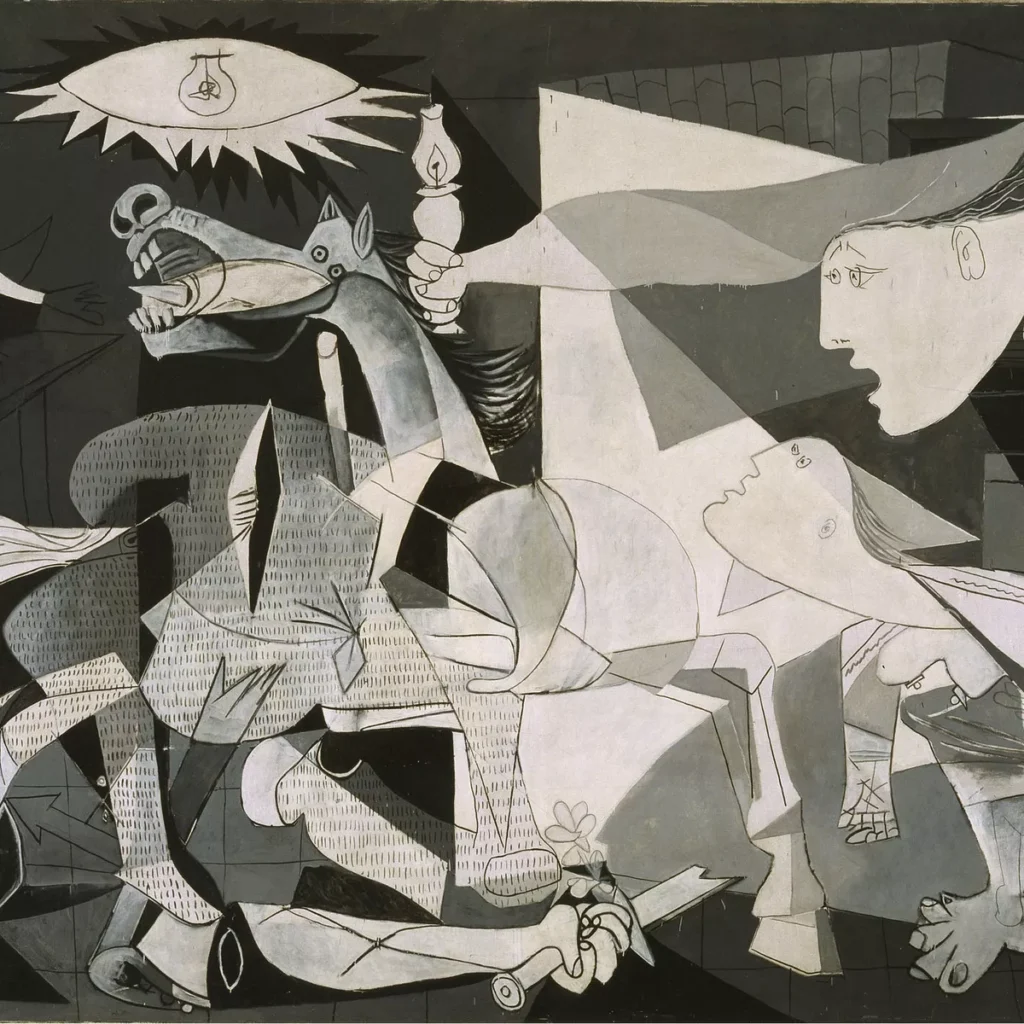
Guernica – Pablo Picasso (1937)
Created in response to the bombing of Guernica during the Spanish Civil War, this massive black-and-white painting captures the horror of civilian suffering under fascism. It became one of the most powerful anti-war images of the 20th century.
The Problem We All Live With – Norman Rockwell (1964)
Painted during the U.S. Civil Rights Movement, it depicts Ruby Bridges being escorted to a desegregated school. The work confronts racism directly and marked a political turn in Rockwell’s career.
Ohio – Crosby, Stills, Nash & Young (1970)
Written after the Kent State shootings, the song condemns state violence against student protesters during the Vietnam War era.
Fight the Power – Public Enemy (1989)
Released amid racial tensions in the U.S., the song became an anthem of resistance, addressing systemic racism and inequality.
1984 – George Orwell (1949)
A dystopian response to totalitarian regimes of the 20th century, particularly Stalinism and fascism. It explores surveillance, propaganda, and political control.
The Handmaid’s Tale – Margaret Atwood (1985)
Written during conservative political shifts in the 1980s, it imagines a theocratic regime that strips women of rights — often revisited during modern political debates.
Show the Future You Want
Of course, not everything has to be dark. You can choose to focus your projects on hope. Here are some examples of art that centers hope in times of uncertainty:
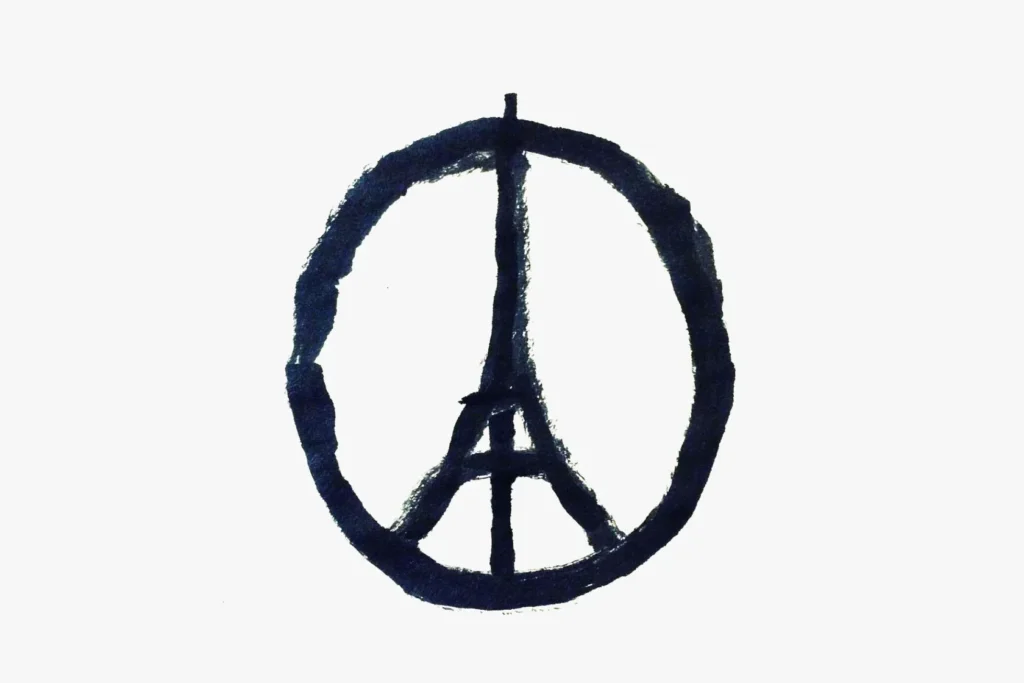
Banksy – Peace for Paris (2015)
After the Paris terrorist attacks, Banksy created a simple peace symbol incorporating the Eiffel Tower. It reframed tragedy into global solidarity.
A Change Is Gonna Come – Sam Cooke (1964)
Written during the Civil Rights Movement, the song acknowledges struggle but centers on faith that transformation is inevitable. It became a hopeful anthem for equality.
One Love – Bob Marley & The Wailers (1977)
Amid political violence in Jamaica, Marley promoted unity and peace. The message: healing through shared humanity.
Wind of Change – Scorpions (1990)
Captured the optimism and uncertainty surrounding the fall of the Berlin Wall and the end of the Cold War.
The Dispossessed – Ursula K. Le Guin (1974)
Written amid Cold War tensions, the novel imagines alternative political systems and asks whether societies built on cooperation could thrive.
I Know Why the Caged Bird Sings – Maya Angelou (1969)
Set against racial oppression in America, Angelou’s memoir ultimately centers on voice, resilience, and reclaiming identity.
What I Have Learned
What I have learned working on my own projects is that I can use them to express how I am feeling — and that helps me stay sane while the world feels like it’s on fire.
When I am working on my creative projects, whether it’s music or writing, I can focus on the moment and not the madness of the time. I can choose to express rage or happiness.
Most importantly, while creating, I am creating the work for me and not for anyone else. Once it’s done, and if I release it, it’s up to the person who receives it to interpret how it makes them feel — good or bad.
Your work is important because it’s for you. It’s important to the world because it builds community. It lets people know they are not alone in their thoughts and feelings.
My Own Examples
I currently have a few projects going on.
One project is called The Diary of Luke Gunn. It takes place in a dystopian future where, after civil wars have broken out across the world, a few corporations have taken over and run everything. While the world is dark, it’s a journey of someone finding hope and good when it seems like there isn’t any.
Another project I’ve been working on is a song I wrote for my band. It’s called Happy.
After a night of losing myself in political and corporate Reddit threads, I was angry at everything going on. I had to put the phone down. I left it upstairs and grabbed my guitar.
At first I played dark, haunting sounds layered with delay. It didn’t help my mood. Then I tried something upbeat — a little funky, with groove. It sounded happy, and it made me feel better. I named it Happy on the spot and decided the song would be about how people need people — and that there is hope in that.
Here is a little excerpt of us rehearsing part of the song. I hope to finish and record it later this year.
HappyThe Role of the Creative Right Now
You don’t have to solve the world’s problems. You don’t have to become a spokesperson. You don’t have to do anything you don’t want to.
But you do have influence over your work — and your own peace.
Your writing.
Your music.
Your art.
These things matter because they are expressions of what you’re feeling right now.
You can document pain without glorifying it. Acknowledge conflict without deepening it. Channel frustration into construction rather than destruction.
In unstable times, creators become tone-setters.
And tone shapes culture.
Your work shapes culture.
The world needs it now more than ever.