
How Price Points and Marketing Hype Affect Your Purchasing Decisions!
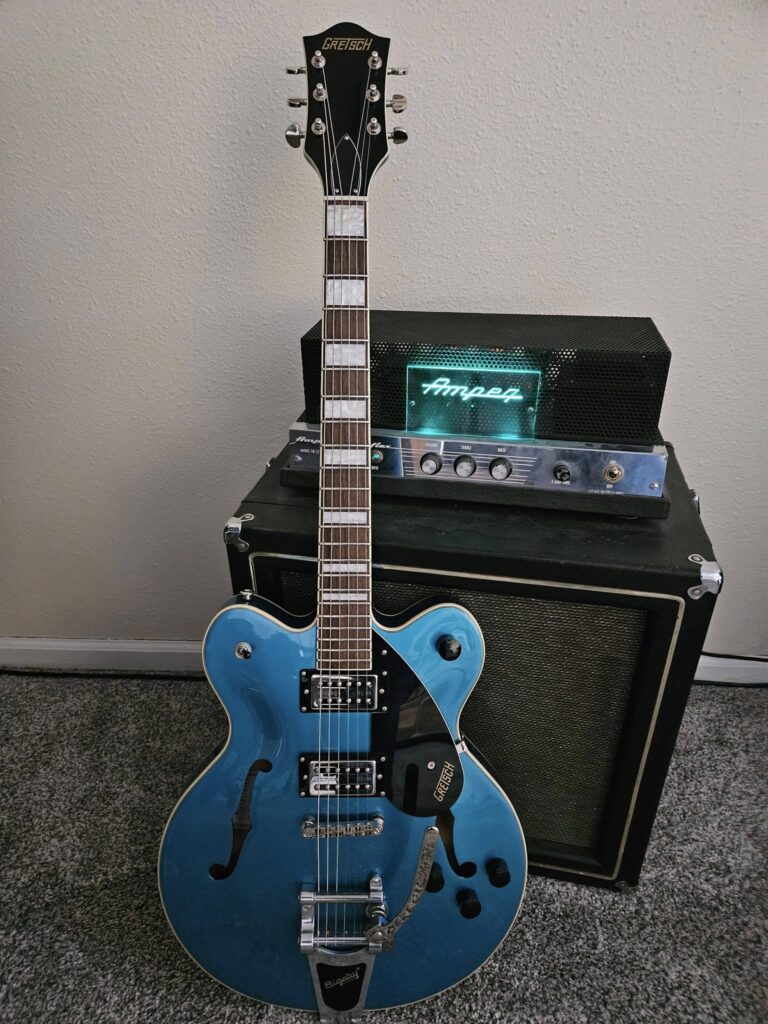
A Reddit thread I read today got me thinking. Someone was asking about a Gretsch Streamliner, questioning whether it could really be considered a “professional grade” guitar since it’s part of the brand’s budget line. That phrase—professional grade—sounds like something cooked up in a marketing meeting, doesn’t it? What does it actually mean? Does it imply that something is only truly “professional” if it costs a lot? That seemed to be the assumption in the discussion.
The funny thing is, I own a Streamliner myself. I’ve played it live on stage, been paid for gigs with it, and even had people compliment its tone. It’s a fantastic instrument. But because it isn’t expensive, does that mean it can’t be considered professional? That idea never sat right with me.
Famous Musicians and Budget Guitars
It’s interesting how easily we forget that plenty of legendary musicians have used inexpensive guitars both live and in the studio—and no one questions whether they’re professionals. Just look at these examples:
- Jack White – began his career playing Airline Res-O-Glas guitars, originally inexpensive department-store models. Even modern Eastwood reissues cost under $1000.
- Dan Auerbach (The Black Keys) – has toured and recorded with vintage Harmony, Silvertone, and Kay guitars, all of which were sold as budget instruments.
- St. Vincent (Annie Clark) – used an affordable Harmony Bobkat early on, before her custom signature guitar.
- Matt Bellamy (Muse) – played stock Fender Telecasters and low-cost Yamaha Pacificas at the start of his career.
- Josh Homme (Queens of the Stone Age) – used an Ovation Ultra GP (which was affordable when he got it) and gigged with Epiphones.
- Billy Corgan – recorded and toured with early Smashing Pumpkins albums using Squier guitars.
- David Byrne (Talking Heads) – frequently performed with budget Italian and Japanese guitars like Eko and Höfner.
- Jack Pearson – played with the Allman Brothers Band using Squier Bullet Strats, guitars that retail for under $200.
Clearly, price alone doesn’t define whether something is “professional.”
Why We Associate High Price with High Quality
We’ve been conditioned to think expensive automatically equals good, and cheap means bad. But in reality, many products do the same thing regardless of price. Often, what you’re paying extra for are added features, branding, or small refinements that might not even matter to you.
Here’s why this happens:
Price–Quality Heuristic
When it’s hard to judge quality directly, we tend to use price as a shortcut. For example, the same wine labeled at $45 is perceived as tasting better than when labeled at $5—even though it’s identical.
The Marketing Placebo Effect
Labeling something as “premium” doesn’t just influence what we think—it actually changes how we experience it. Brain imaging studies show higher prices activate pleasure centers more strongly. People genuinely report a better taste or effect when they believe something costs more.
Prestige Pricing & Anchoring
Brands keep prices high to create a sense of exclusivity. They might list an item at $1000 and “discount” it to $750, making $750 seem like a bargain—even if it’s still expensive.
Reality vs. Perception
Research shows that high prices don’t consistently translate to higher satisfaction once the product is actually used. Blind tests with products like wine or guitars often reveal that cheaper items perform just as well. And while expensive items may have slightly better materials or construction, the difference is rarely as big as the price suggests.
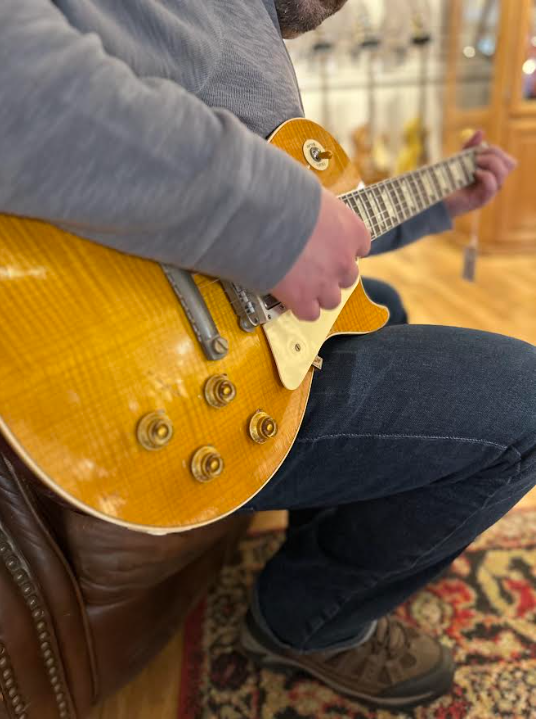
For instance, I’ve played hundreds of Gibson Les Pauls. My current guitar cost around $2500. I’ve tried a Murphy Lab Les Paul that cost $10,000—easily the best I’ve ever played—and another at $12,000 that I thought was just okay. Sure, those higher-end guitars had better hardware, lighter weight, and nicer finishes, but were they thousands of dollars better? In my opinion, maybe only 10–15% better—not nearly enough to justify the extra cost for me.
Does that make my less expensive guitar “not professional grade”? That’s exactly where marketing hype and perception start to overshadow reality.


Make the Choice That’s Right for You
When it comes to buying anything—a guitar, a car, or even software—get the thing that feels right to you and fits your budget. Whether it’s a $200 Squier or a $20,000 custom build, the only opinion that truly matters is your own. Forget about labels like “professional grade.” They’re just buzzwords.
In the end, what makes something professional isn’t the price—it’s how you use it. And you don’t need a marketing label to tell you that.