
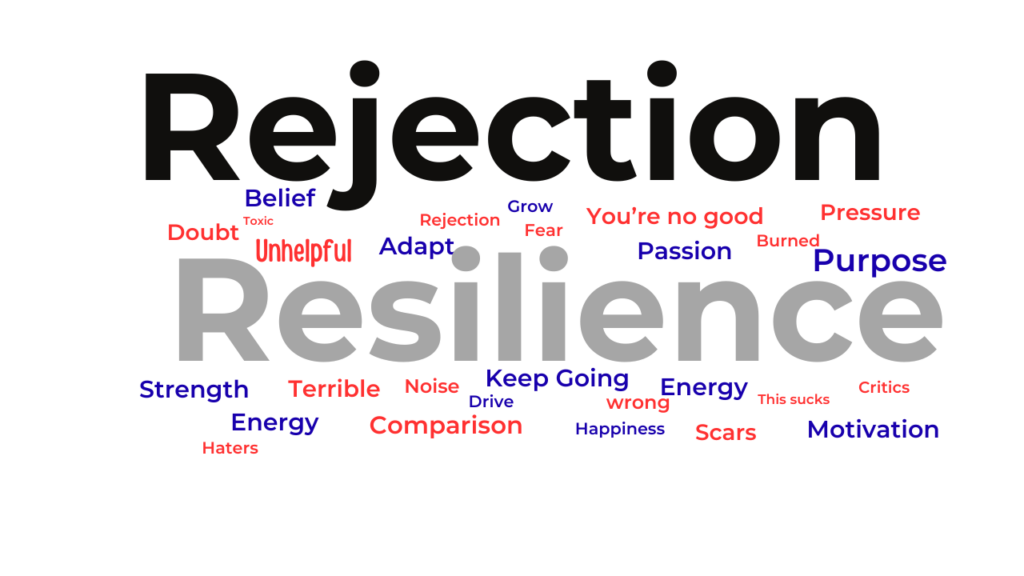
Rejection and Resilience — How to Take Constructive Criticism and Deal with the Noise
I recently submitted a piece of flash fiction for publication. It got rejected again. Second time.
A few years ago, that would’ve wrecked me. My mind would spiral:
No one wants to read your stuff. You suck. Just give up.
But that didn’t happen this time.
Somewhere along the way, I built a thicker skin. I’ve learned how to take constructive criticism and actually use it to get better. And I’ve learned something just as important: not all feedback deserves your attention. You’re not going to please everyone and some people just like to tear things down.
Your job as a creative isn’t to avoid criticism. It’s to be resilient. Take what helps. Let the rest go.
Easy to say. Harder to do.



A few months ago, my wife and I took a trip to Northern California. We went hiking through the redwoods—something we’ve done a few times. Every time, it hits you the same way: those trees are massive, ancient, and unreal.
This time was different.
It was our first visit after one of the major fires in the area. A forest ranger told us about the 200-foot walls of flame that tore through parts of the park, and how it took years before sections could even reopen.
What stood out to me wasn’t the damage, it was how they kept growing!
These trees have been through everything: fires, droughts, extreme cold, you name it they have see it. You can still see the burn scars on their trunks. Broken limbs and blackened bark.
And they’re still standing. Still growing. Still reaching for the sky.
That stuck with me.
Because as creatives, we go through our own version of that. Rejection. Criticism. Moments that burn a little (or a lot). And somehow, we’re expected to keep going anyway.
I had an experience years ago after playing a show that I still think about.
After my set, I was hanging out with the lead guitarist from another band. We had a beer, talked music, normal post-show stuff. Then a guy walked up and started going on about how great the other guitarist was.
And he was right, he was great. Incredible player. Every bit of praise was deserved.
Then the guy turned to me and said:
“You’ve got a lot of work to do to be as good as him.”
Then he just walked away.
I just stood there, kind of dumbfounded.
The other guitar player was cool about it. Told me not to listen, said I played great.
Truth is, I wasn’t great. Not like him. But I never saw music as a competition. We were different players, different styles.
That guy? He wasn’t trying to help. He was just being an asshole.
But here’s the part that matters: I still used it.
After that show, I signed up for guitar lessons again. Years after I’d stopped. Not because he was right in how he said it, but because there was something in there I could use.
I’ve had more moments like that than I’d like to admit. If you’re putting your work out there, I’m guessing you have too.
That’s part of it.
Like those redwoods, you take the hit, and you keep growing.
Knowing Good Feedback from Bad
Not all criticism is created equal. Learning the difference is a game-changer, not just for improving your work, but for protecting your energy.
Here’s what I’ve learned:
Good Feedback (Specific, Actionable, Constructive)
- Focuses on the work, not the writer
“The dialogue feels natural, especially in the bar scene. Frank’s voice is consistent and distinct.” - Points to exact moments
“In the third paragraph, the pacing slows down because of the long description. You might tighten it to keep the tension.” - Explains why something works (or doesn’t)
“The twist is interesting, but it feels rushed. Giving us one more hint earlier could make it more satisfying.” - Offers suggestions, not commands
“You could try showing Madison’s emotions through action instead of internal thoughts here.” - Balances strengths and improvements
“The opening hook is strong. Later, the stakes feel less clear—maybe clarify what Frank stands to lose.” - Asks thoughtful questions
“What is Frank afraid of in this moment? Making that clearer could raise the tension.”
Bad Feedback (Vague, Personal, or Useless)
- Too vague to act on
“It’s just not working.”
“This feels off.” - Overly harsh or dismissive
“This is boring.”
“I wouldn’t read this.” - Based purely on personal taste
“I don’t like stories like this.”
“I hate first-person narration.” - Rewrites instead of guiding
“Here’s how I would write this…” (and suddenly it’s not your work anymore) - Contradictory without context
“Add more detail.” / “This has too much detail.” - Attacks the writer, not the work
“You’re not good at dialogue.”
Working with a writing group has helped me sharpen this skill. I use it when giving feedback, and when evaluating my own work.
And if you’re giving feedback: be kind. People are close to their work. I call it “don’t call my baby ugly” syndrome. It can be hard for people to take any feedback.
When you’re that close to something, it’s hard to see the flaws. That’s why good feedback matters, it helps you make your best work better.
The Noise
Let’s be honest, you’re going to run into people who just want to tear things down. That is all they have.
They’re everywhere. Scroll through any comment section and you’ll find them.
The key is figuring out if there’s anything useful in what they’re saying.
If there is, take it.
If not, move on.
Don’t engage. Don’t waste energy trying to convince them. Some people aren’t looking to help, they’re looking to feel right.
Those aren’t your people.
And the more time you spend on them, the less you have for your actual work.
Focus on what matters:
Getting better at your craft. Putting your work out there. Learning from the right voices.
Some people will love it. Some won’t.
That’s not failure—that’s the deal.
Keep going.